
 ไทย
ไทย 日本語
日本語 Tiếng Việt
 ភាសាខ្មែរ
In an Era Where “Data” Is an Organization’s Most Valuable Asset, Security Is Non-Negotiable
Today, organizations of all sizes rely on information technology systems to operate their businesses—from customer databases, financial records, employee information, and production data to strategic information classified as confidential business information.
Many organizations invest heavily in cybersecurity solutions, including firewalls, endpoint protection, data encryption, and threat detection systems. However, they often overlook the risks associated with the final stage of an IT asset’s lifecycle: end-of-life IT assets.
In reality, decommissioned devices such as:
- Hard disk drives (HDDs)
- Solid-state drives (SSDs)
- Notebooks
- Desktop computers
- Servers
- Storage systems
- Network-attached storage (NAS)
- Storage area networks (SAN)
- Mobile phones
- Tablets
- Network equipment
may still contain sensitive organizational data—even after files have been deleted or the devices have been formatted or reset.
This data may be recoverable using specialized tools unless it has been securely erased in accordance with internationally recognized standards. This is why leading organizations worldwide place great importance on selecting an ISO 27001-certified partner to manage end-of-life IT assets.
Data security does not end when a device is powered off. It ends only when it can be verified that the data has been completely destroyed and is no longer recoverable.
What is ISO 27001?
ISO/IEC 27001 is the internationally recognized standard for Information Security Management Systems (ISMS). It is adopted worldwide by government agencies, multinational corporations, financial institutions, hospitals, cloud service providers, and organizations responsible for managing large volumes of sensitive information.
The core principle of ISO 27001 is not simply the implementation of security technologies. It is the establishment of an organization-wide information risk management system covering every stage—from data collection, storage, access, and use to backup and secure destruction when the information is no longer required.
In other words, ISO 27001 covers the entire information lifecycle.
When IT equipment reaches the end of its useful life, secure data erasure becomes a critical step. If this process is handled incorrectly, sensitive organizational information may be exposed—even after the equipment has been resold, recycled, or donated.
Why Should an ISO 27001-Certified Organization Choose a Partner That Meets the Same Standard?
Many organizations have achieved ISO 27001 certification but still assign the management of end-of-life IT equipment to general equipment buyers that do not follow recognized information security standards. This can create a significant vulnerability within the organization’s overall Information Security Management System.
For example:
- The IT department may maintain strict control over its systems.
- The security team may carefully define and manage data access permissions.
- The compliance team may ensure that all applicable legal and regulatory requirements are met.
However, when hundreds of servers are decommissioned, they may be transferred to a general equipment buyer with no standardized data-erasure process, no supporting certification, and no auditable procedures.
This single step can expose the organization to the risk of a data breach and potentially damage its reputation, undermine customer trust, and create issues during an audit.
Selecting an ISO 27001-certified partner helps ensure that clear controls are applied throughout the entire process, that each action can be traced and audited, and that data-related risks are minimized at every stage.
The Risks Many Organizations Overlook When Selling or Disposing of IT Equipment
Many executives assume that once a device has been:
“Deleted,”
“Formatted,” or
“Reset,”
all of its data has disappeared.
In reality, conventional deletion does not physically remove data from a storage device. The operating system simply marks the space as available for new data. Until the original information has been securely overwritten or erased using an appropriate method, data recovery specialists may still be able to retrieve important files using specialized software.
Recoverable information may include:
- Customer information
- National identification numbers
- Passport information
- Payroll records
- Financial statements
- Business contracts
- Bank account information
- Source code
- Engineering designs
- Research data
- Intellectual property
For large organizations, this information can be extremely valuable. If it falls into the wrong hands, the consequences may include significant legal liability, financial loss, and reputational damage.
Asia Data Destruction : A Trusted Partner for Data Erasure in Accordance with International Standards
When selecting an IT Asset Disposition (ITAD) service provider, organizations should consider more than the purchase price or resale value of their equipment. The provider’s ability to protect organizational data should be a primary consideration.
Asia Data Destruction provides comprehensive end-of-life IT asset management services through an operational framework aligned with ISO 27001 requirements.
Every stage of the process is designed to be traceable and auditable, with appropriate information security controls in place to reduce the risk of unauthorized access. This covers the entire workflow—from equipment collection, transportation, and secure storage to data erasure, verification, and certificate issuance.
All procedures are carried out by trained professionals who operate in accordance with established standards.
How Can Data Be Erased Without Anyone Viewing Your Information?
One of the most common questions asked by executives and IT departments is:
“Can technicians access or view the information stored on our devices during the data-erasure process?”
Asia Data Destruction’s data-erasure process is designed to protect information from the very beginning. Data is erased at the device’s firmware or BIOS level through a process that does not require files to be opened or customer information to be accessed.
Technicians do not need to view documents, photographs, databases, or any other business information in order to perform the data-erasure procedure.
This approach reduces the risk of human exposure and gives organizations greater confidence that their sensitive information will remain protected throughout the process.
After the procedure is completed, the erasure results are verified in accordance with the applicable standards. This confirms that the data has been successfully erased before the equipment proceeds to the next stage.
This is one of the key reasons why many leading organizations choose to work with ISO 27001-certified service providers. Such providers focus not only on “erasing data,” but also on implementing a process that can be verified, audited, and trusted at every stage.
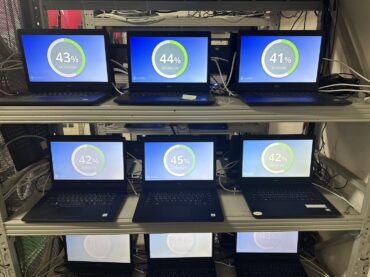
Asia Data Destruction’s Data-Erasure Process: Secure, Transparent, and Fully Auditable at Every Stage
When an organization decides to decommission IT equipment—whether computers, notebooks, servers, storage systems, or office equipment—the process does not end when the assets are removed from its premises. The most important consideration is ensuring that the data stored on those devices is managed correctly and securely.
Asia Data Destruction has designed its operational processes to align with ISO 27001 requirements, prioritizing data security at every stage—from the initial collection of equipment to returning reusable assets to the circular economy.
1. IT Asset Verification
Our team inspects and verifies every item of customer equipment while recording essential information, including:
- Equipment type
- Brand and model
- Serial number
- Asset tag
- Equipment condition
- Quantity
All information is recorded systematically, creating a complete audit trail throughout the process.
Accurate asset records also allow IT and asset management departments to reconcile the collected equipment with the organization’s asset register. This reduces errors and improves transparency in asset management.
2. Chain of Custody: Systematic Control of Asset Transfers
One of the core principles of ISO 27001 is controlling access to information.
Asia Data Destruction therefore applies a comprehensive chain-of-custody process to every asset. From the moment the customer transfers the equipment, detailed records are created—including the identities of the parties handing over and receiving the assets, the date and time of transfer, and the quantity of equipment.
This allows each asset to be tracked throughout the entire process.
Every movement is controlled and systematically documented, reducing the risk of equipment being lost, substituted, or removed from the process without authorization.
For organizations subject to compliance requirements or internal and external audits, complete chain-of-custody records are an essential form of evidence that strengthens the credibility of their information management processes.
3. Data Erasure Without Accessing Customer Information
One of the questions we receive most frequently is:
“Can your technicians access or view our information?”
The answer is no.
Asia Data Destruction uses a secure data-erasure process designed to erase information without requiring technicians to open any customer documents, images, databases, or files.
The process begins at the device’s BIOS or firmware level. Technicians do not need to access the customer’s operating system or log in to the device. This approach reduces the risk of human access and helps prevent sensitive information from being exposed during the procedure.
Throughout the data-erasure process, customer information is not opened, read, copied, or removed from the system.
4. Data Erasure in Accordance With International Standards
Deleting files or formatting a hard drive does not constitute secure data erasure. Even after an operating system has been reinstalled, some of the original information may still be recoverable using specialized tools.
Asia Data Destruction applies internationally recognized data-erasure methods to ensure that information stored on data-bearing media is overwritten using an appropriate process, minimizing the possibility of recovery in accordance with the applicable standard.
The process is suitable for:
- Hard disk drives (HDDs)
- Solid-state drives (SSDs)
- NVMe SSDs
- Server storage
- Enterprise storage systems
- Notebooks
- Desktop computers
- Workstations
- External hard drives
Once the data-erasure process has been completed, the results are verified to confirm compliance with the specified standard before the equipment proceeds to the next stage.
5. Certificate of Data Destruction for Audit Evidence
Many organizations are subject to assessments conducted by customers, regulatory authorities, or internal and external auditors.
Common questions include:
- Is there evidence that the data was erased?
- Who performed the erasure?
- Which standard was used?
- Which equipment has been securely erased?
- When was the procedure completed?
Asia Data Destruction issues a Certificate of Data Destruction as formal confirmation of the data-erasure results.
The certificate can reference relevant equipment details, the date of the procedure, and the outcome of the data erasure. This gives organizations reliable audit evidence that can be presented with confidence.
Having verifiable certification also reduces the administrative burden on IT and compliance teams when responding to questions from auditors, customers, or business partners.
More Than Data Erasure: Comprehensive IT Asset Management
After data has been securely erased, many devices still retain economic value. Instead of becoming electronic waste, these assets can be assessed and potentially returned to productive use.
Asia Data Destruction provides buyback services for end-of-life IT assets and office equipment, including:
- Computers
- Notebooks
- Servers
- Storage systems
- Monitors
- Network equipment
- Uninterruptible power supplies (UPS)
- Printers
- Smartphones
- Tablets
- Office equipment
This service allows organizations to recover value from unused assets while reducing equipment disposal costs. Customers benefit from both secure data protection and financial returns from assets that still retain value.
Supporting the Circular Economy by Giving Old Equipment New Value
Organizations worldwide are placing greater emphasis on sustainable business practices. One important approach is the circular economy.
Instead of disposing of IT equipment through landfill or destroying every asset, devices that remain usable can be sorted, inspected, repaired, and appropriately returned to service.
This approach allows resources to be used more efficiently, reduces the demand for new raw materials, and minimizes environmental impact.
Equipment that can no longer be reused is processed through appropriate recycling channels to reduce electronic waste, or e-waste, and improve overall resource efficiency.
Reducing Carbon Emissions and Supporting Corporate ESG Goals
Many organizations have incorporated environmental, social, and governance (ESG) and net-zero carbon targets into their business strategies.
Choosing a service provider capable of responsibly reusing or recycling equipment can help reduce greenhouse gas emissions associated with manufacturing new devices while minimizing long-term environmental impact.
Effective IT asset management not only protects information but also demonstrates an organization’s commitment to social responsibility, environmental sustainability, and good corporate governance—factors that are becoming increasingly important to customers, investors, and business partners.
Selecting a partner that combines internationally recognized information security standards with sustainable resource management practices therefore does more than reduce risk. It creates long-term value by strengthening credibility, improving operational efficiency, and supporting the organization’s sustainability objectives.
Why Leading Organizations Choose Asia Data Destruction as Their IT Asset Management Partner
The selection of an IT Asset Disposition (ITAD) service provider should not be based solely on price or the resale value of equipment. Organizations should also consider the provider’s ability to manage information risks, maintain transparent processes, and support audits in accordance with international standards.
For organizations that handle sensitive information—such as customer records, financial information, intellectual property, or business-critical data—choosing a partner with a reliable management system is an investment in preventing future losses.
Asia Data Destruction is committed to providing services in accordance with international standards, with a strong focus on information security, operational transparency, and creating value for customers in every dimension.
Key Advantages of Asia Data Destruction
ISO 27001 Certification
All operations are conducted under an Information Security Management System (ISMS), enabling information security risks to be controlled systematically.
Expert Team
All personnel are trained in established operating procedures, understand information security requirements, and work in strict accordance with defined processes.
Secure Data Erasure
Data is erased through a process designed to prevent access to customer information. There is no need to open files or access the device’s operating system.
The procedure follows recognized data-erasure standards to ensure that information is managed securely.
Certificate of Data Destruction
A Certificate of Data Destruction is issued as formal evidence of the erasure results. It can support audits conducted by customers, regulatory authorities, internal teams, or external auditors.
Chain of Custody
The movement and status of each asset can be traced at every stage—from collection, transportation, and storage to data erasure, recycling, or reuse.
Buyback Service
Asia Data Destruction purchases end-of-life IT assets and office equipment, enabling organizations to recover value from unused assets while reducing the burden associated with managing unnecessary equipment.
Circular Economy Support
We promote the efficient reuse of resources, reduce electronic waste, and support sustainable business practices.
ESG Goal Support
Our services help organizations reduce environmental impact and greenhouse gas emissions associated with manufacturing new equipment while supporting their environmental, social, and governance objectives.
Checklist for Selecting a Data-Erasure and IT Asset Buyback Company
Before choosing a service provider, confirm whether the company you are considering meets all of the following requirements:
✅ ISO 27001 certification
✅ A standardized secure data-erasure process
✅ Ability to issue a Certificate of Data Destruction
✅ A traceable and auditable chain-of-custody system
✅ An experienced team and clearly defined operating procedures
✅ Both on-site and off-site services, depending on the organization’s requirements
✅ A buyback service that recovers value from reusable equipment
✅ Appropriate electronic-waste management practices
✅ Support for circular economy principles and ESG objectives
If the answer to any of these questions is “no,” the organization may need to consider the potential future risks to its information, audit readiness, and corporate reputation.
Frequently Asked Questions
Is Formatting or Resetting a Device Sufficient to Erase Its Data?
No. Conventional deletion methods do not completely remove information from storage media. In many cases, the data can still be recovered using specialized tools.
Organizations should therefore use a secure data-erasure process performed in accordance with an appropriate standard.
Can Technicians View an Organization’s Information During the Data-Erasure Process?
Asia Data Destruction’s process is designed to minimize access to customer information. Data is erased using a procedure that does not require technicians to open files or access the customer’s operating system, reducing the risk of human access to sensitive information.
Will We Receive a Certificate After the Data Has Been Erased?
Yes. A Certificate of Data Destruction is issued as formal evidence for audits conducted by customers, auditors, or relevant authorities.
Can Asia Data Destruction Purchase Unused IT Equipment?
Yes. Asia Data Destruction provides buyback services for a wide range of IT assets and office equipment.
Our team appropriately assesses the condition and value of each asset, helping organizations receive a financial return from equipment they no longer use.
How Does Reusing Equipment Benefit the Environment?
Properly reusing or recycling equipment helps reduce the consumption of natural resources, the need to manufacture new devices, the volume of electronic waste, and greenhouse gas emissions.
These practices form part of the circular economy and support sustainable business operations.
Conclusion
Organizational data is a valuable asset and deserves protection until the final moment of an IT asset’s lifecycle.
Selecting an ISO 27001-certified partner not only reduces the risk of a data breach but also ensures that every stage is traceable, supports audit requirements, and strengthens confidence among customers, business partners, and other stakeholders.
Asia Data Destruction provides comprehensive IT asset management services—from equipment collection, chain-of-custody controls, and secure data erasure to issuing Certificates of Data Destruction, purchasing IT and office equipment, and responsibly returning assets to the circular economy.
When an organization chooses a partner that upholds the same standards it follows internally, it does more than reduce information security risks. It strengthens corporate governance, enhances credibility, and supports long-term sustainability objectives.
If your organization is planning to decommission a large number of computers, servers, notebooks, or other IT assets and needs assurance that its data will be managed securely—with appropriate certification that can be used as audit evidence—Asia Data Destruction is ready to be your trusted partner at every stage, from protecting sensitive information to creating new value from assets that are no longer in use.