
 ไทย
ไทย 日本語
日本語 Tiếng Việt
 ភាសាខ្មែរ
Illegal Industrial Waste Dumping Highlights an E-Waste Problem Organizations Cannot Ignore
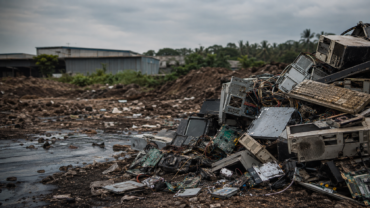
The e-waste problem does not end when obsolete computers, hard drives, servers, mobile phones, and other IT equipment are removed from the workplace. Without proper tracking and responsible disposal procedures, these devices may become industrial waste that is illegally dumped, sent to landfills, or dismantled improperly. Such practices can have long-term consequences for soil, water resources, community health, and the environment.
A report aired on Thai PBS’s “Trong Praden” program on 7 August 2026 revealed that Thailand had recorded nearly 400 cases of illegal wastewater and industrial waste dumping over the previous eight years, with the Eastern Region reporting the highest number of incidents.
These figures demonstrate that e-waste and industrial waste are not distant concerns—particularly for organizations that regularly replace their IT equipment. In addition to the environmental impact, devices that are discarded or transferred without proper controls may still contain sensitive information, creating a serious risk of data breaches.
This should prompt every organization to ask important questions: Where do retired computers, hard drives, servers, mobile phones, and other electronic devices ultimately go? Has the data stored on them been securely destroyed? Could these devices end up being illegally dumped, sent to landfills, or discarded within local communities?
Choosing a qualified provider of secure data destruction and used IT equipment purchasing services is therefore essential for both information security and environmental responsibility.
How Does E-Waste Affect Everyone?
Every IT device has a limited lifespan. When it reaches the end of its useful life, it may be resold, donated, returned to a service provider, or sent for disposal. Without a clear system for controlling and tracking its final destination, personal or organizational equipment may fall outside the proper process and contribute to the growing e-waste problem.
Some electronic waste contains plastics, metals, circuit boards, batteries, and other materials that can harm soil, water resources, and community health if improperly dismantled, burned, or sent to landfills.
Therefore, we should not consider only the financial return from selling used equipment. We should also verify whether it will be reused, recycled, or responsibly managed at the next stage of its lifecycle.
Why Should Data Be Destroyed Before Selling Used IT Equipment?
Even when a device is no longer in use, hard drives, SSDs, mobile phones, servers, and other storage media may still contain sensitive information, including:
- Personal data belonging to individuals, customers, and employees
- Accounting documents and financial information
- Customer and business partner databases
- Emails, contracts, and internal documents
- Passwords and system access credentials
- Intellectual property and confidential business information
Deleting files, formatting a storage device, or restoring a device to its factory settings may not permanently erase all data. In some cases, specialized tools can still be used to recover it.
A data breach may expose an organization to legal consequences, reputational damage, loss of customer trust, and financial harm. Before selling or transferring IT equipment, organizations should therefore select a data destruction method appropriate for the type of storage media and the sensitivity of the information it contains.
ADD Provides Secure Data Destruction Services
ADD provides secure data destruction services for end-of-life electronic equipment, helping reduce the risk of data breaches before devices are reused, recycled, or transferred for further processing.
Our process covers every stage, from equipment collection and inventory verification to access control, data destruction using the specified method, and the preparation of supporting documentation that enables customers to verify the process.
The appropriate data destruction method is determined by the type of storage media, the condition of the equipment, and the customer’s security requirements. Available methods may include secure data erasure or the physical destruction of storage media when the equipment is not intended for reuse.
Purchasing Used IT Equipment and Recovering Value from Retired Assets
In addition to secure data destruction, ADD purchases used IT and electronic equipment, helping organizations recover value from assets they no longer use.
Equipment that remains functional or can continue to provide value is properly assessed and sorted. This helps extend the useful life of resources, reduce the need to manufacture new equipment, and minimize electronic waste.
For materials that cannot be reused, ADD is committed to managing them through appropriate processes under a zero-landfill approach. This enables resources to be recovered and utilized to their fullest potential in line with circular economy principles.
Why Is a Certificate of Data Destruction Important?
Once the data destruction process has been completed, customers receive a Certificate of Data Destruction. This document confirms that the equipment or storage media entrusted to ADD has been processed in accordance with the agreed scope of work.
The certificate can serve as supporting evidence for internal audits, asset management, compliance with organizational security policies, and assessments of relevant management systems and standards.
It also provides assurance that data management does not end when equipment leaves the workplace. Instead, the process follows documented procedures and produces evidence that can be traced and verified.
Operating in Accordance with International Standards
ADD operates under management systems and recognized guidelines covering quality, environmental responsibility, occupational health and safety, and information security, including:
- ISO 9001 — Quality Management System
- ISO 14001 — Environmental Management System
- ISO 45001 — Occupational Health and Safety Management System
- ISO/IEC 27001 — Information Security Management System
- NIST SP 800-88 — Guidelines for Media Sanitization
- NAID AAA Certification — Certification covering secure data destruction services within the approved scope
These standards and guidelines support process controls throughout the entire service lifecycle—from collection, transportation, inventory verification, and secure storage to data destruction and the responsible management of equipment after processing.
How to Choose a Data Destruction and Used IT Equipment Purchasing Company
Before selecting a service provider, organizations should consider at least five important questions:
- Does the provider have a process for controlling and tracking equipment from collection to final disposition?
- Are its data destruction methods appropriate for hard drives, SSDs, and other types of storage media?
- Does it provide customers with a Certificate of Data Destruction and a completion report?
- Does it operate in accordance with recognized quality, environmental, and information security standards?
- Can it clearly explain how the equipment and remaining materials will be processed?
The right service provider should help organizations recover value from retired equipment, protect sensitive data, and ensure that their assets do not become an environmental burden.
Choose ADD to Protect Your Data and Reduce E-Waste
Nearly 400 reported cases of illegal industrial waste dumping serve as a powerful reminder that managing end-of-life electronic equipment should not end when the devices are sold or removed from the workplace. Organizations must be able to verify whether the data has been securely destroyed, where the equipment has been sent, and whether the remaining materials have been managed responsibly.
ADD provides secure data destruction and used IT equipment purchasing services. We help organizations recover value from retired assets, reduce the risk of data breaches, and minimize the environmental impact of e-waste through a zero-landfill approach.
Contact ADD to request a valuation for your used IT equipment or develop a data destruction plan aligned with your organization’s security policies. Upon completion, you will receive a Certificate of Data Destruction as documented evidence of the process.
📞 +66 2026 6446
📩 contact@asiadatadestruction.com
Frequently Asked Questions About Data Destruction and Used IT Equipment
1. Does deleting files from a hard drive mean the data has been destroyed?
Not necessarily. Deleting files or formatting a device may still leave data recoverable. A suitable data destruction method should be selected based on the type of storage media and the sensitivity of the information.
2. What is a Certificate of Data Destruction?
A Certificate of Data Destruction is a document confirming that equipment or storage media has undergone data destruction in accordance with the agreed scope of work. It can be used as supporting evidence for audits and organizational risk management.
3. Can equipment be resold after its data has been destroyed?
This depends on the data destruction method and the condition of the equipment. If the data is securely erased and the equipment remains functional, it may be assessed for reuse or resale to recover its remaining value. However, physically destroyed storage media cannot be reused.
4. What types of IT equipment does ADD purchase?
ADD evaluates and purchases retired IT and electronic equipment. The eligible equipment types, quantities, conditions, and purchasing terms are assessed according to the details of each project.
5. Is unusable equipment sent to a landfill?
ADD follows a zero-landfill approach. We focus on sorting materials and directing them to appropriate recovery, recycling, or processing channels to reduce electronic waste and its environmental impact.