
 ไทย
 日本語
 Tiếng Việt
 ភាសាខ្មែរ
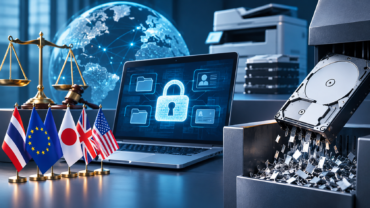
Secure data destruction is an essential process for organizations looking to prevent data breaches, protect sensitive information, and support compliance with personal data protection regulations such as PDPA and GDPR.
Many organizations invest heavily in cybersecurity but overlook the risks associated with retired IT equipment. Computers, laptops, hard drives, SSDs, servers, and even photocopiers may still contain sensitive information after files have been deleted or the devices have been formatted.
Without proper data destruction, residual information may be recovered and accessed by unauthorized individuals, exposing organizations to regulatory penalties, financial losses, and reputational damage.
Why Is Data Destruction Important for PDPA and GDPR Compliance?
Data protection regulations around the world emphasize the importance of protecting personal information throughout its entire lifecycle, from collection and processing to storage and final disposal.
- PDPA (Thailand): Section 37 requires data controllers to implement appropriate security measures and establish procedures for deleting or destroying personal data when it is no longer necessary, subject to applicable legal requirements.
- GDPR (European Union): Establishes storage limitation principles, the right to erasure, and security requirements based on the level of risk.
- APPI (Japan): Requires appropriate measures to protect personal information.
- HIPAA (United States): Establishes privacy and security requirements for protected health information within regulated organizations.
Although these regulations differ across jurisdictions, they highlight a common principle: an organization’s responsibility for data security does not end when its IT equipment is retired.
4 Global Data Destruction Failures and Their Costly Consequences
1. Japan: Government Hard Drives Awaiting Data Destruction Were Stolen and Sold Online
In 2019, an employee of a data destruction service provider stole 18 hard drives belonging to the Kanagawa Prefectural Government and sold them through an online auction platform.
The hard drives contained government documents, tax records, and personal information. Some of the information was recoverable by a purchaser.
This incident highlighted the importance of maintaining strict control over IT assets awaiting destruction and monitoring third-party service providers throughout the disposal process.
Key Lesson: Organizations should establish a secure Chain of Custody to track IT assets throughout collection, transportation, storage, and final data destruction.
Read more: Japan’s Hard Drive Data Breach Case – Asia Data Destruction
2. United Kingdom: NHS Surrey Fined £200,000 Following a Data Breach
In 2013, NHS Surrey received a £200,000 monetary penalty from the UK’s Information Commissioner’s Office (ICO) after personal information relating to more than 3,000 patients was discovered on second-hand computers.
The organization had outsourced the disposal of its old computers to a third-party service provider offering free equipment disposal. However, it failed to adequately monitor and verify whether the data had been securely destroyed.
Key Lesson: Cost should not be the only consideration when selecting a data destruction service provider. Organizations should also evaluate security procedures, professional qualifications, certifications, and evidence of successful data destruction.
Read more: BBC News
3. United States: Photocopiers Exposed the Health Information of More Than 344,000 Individuals
Affinity Health Plan, a US health insurance provider, returned leased photocopiers without properly removing sensitive information stored on their internal hard drives.
The incident potentially affected up to 344,579 individuals.
In 2013, the company agreed to pay $1,215,780 to settle potential violations of the HIPAA Privacy and Security Rules.
This case demonstrates that data security risks extend beyond computers and servers. Everyday office equipment can also store highly sensitive information.
Key Lesson: Data destruction policies should cover all devices capable of storing information, including printers, photocopiers, smartphones, tablets, and other office equipment.
Read more: U.S. Department of Health and Human Services (HHS)
4. Morgan Stanley: The Cost of Choosing the Wrong Data Destruction Service Provider
Morgan Stanley Smith Barney hired a moving and storage company without relevant data destruction expertise to manage retired hard drives and servers.
Some of these devices were subsequently resold with sensitive information still stored on them. The security failures involved the personal information of approximately 15 million customers.
In 2022, Morgan Stanley agreed to pay a $35 million penalty to the U.S. Securities and Exchange Commission (SEC).
The incident highlights the significant financial, regulatory, and reputational risks associated with inadequate IT asset disposal practices.
Key Lesson: Organizations should work with qualified data destruction and IT Asset Disposition (ITAD) service providers that implement recognized security practices and maintain verifiable processes.
Read more: U.S. Securities and Exchange Commission (SEC)
3 Essential Measures for Secure Data Destruction
These four global cases demonstrate that secure data destruction requires more than simply deleting files or physically destroying storage devices.
Organizations need a comprehensive process that includes appropriate sanitization methods, asset tracking, and verifiable evidence of destruction.
1. Data Destruction Following International Standards
Organizations should select appropriate data sanitization methods based on the type of storage media, the sensitivity of the information, and the associated security risks.
International guidelines and standards, such as NIST SP 800-88 Rev. 2 and IEEE 2883, provide guidance for establishing effective media sanitization procedures.
Common data destruction and sanitization methods include:
- Data Wiping: Using appropriate software or sanitization commands to securely remove information from storage devices, allowing equipment to be reused where appropriate.
- Degaussing: Using a powerful magnetic field to erase information stored on magnetic media, such as hard disk drives and magnetic tapes.
- Physical Shredding: Physically destroying storage devices to prevent access to residual information.
Each method has different applications and limitations. Organizations should select the appropriate method for each type of storage media and verify the results before equipment is reused, resold, or disposed of.
2. Secure Chain of Custody Throughout the Data Destruction Process
Chain of Custody is a documented tracking process that records the possession, movement, and handling of IT assets throughout their disposal lifecycle.
It provides visibility into:
- The location of each IT asset
- The individuals responsible for handling the equipment
- Transportation and storage records
- The status of data destruction activities
A well-managed Chain of Custody helps reduce the risks of equipment loss, theft, unauthorized access, and improper resale.
It also strengthens accountability and traceability throughout the IT asset disposal process.
3. Certificate of Destruction (CoD)
A Certificate of Destruction is a document that provides evidence that data or storage devices have been destroyed according to the specified procedures.
The certificate and supporting reports should contain relevant information, such as:
- Equipment details and serial numbers
- Data destruction methods
- Date of destruction
- Responsible personnel
- Destruction results
These documents support internal audits, regulatory compliance reviews, and organizational accountability.
How to Choose a Reliable Data Destruction Service Provider
Selecting a qualified data destruction service provider is an important part of an organization’s data protection and risk management strategy.
Before outsourcing data destruction, organizations should consider the following:
- ISO/IEC 27001 Certification: Information security management.
- NAID AAA Certification: Secure information destruction practices.
- NIST SP 800-88: Recognized media sanitization guidelines.
- Chain of Custody: Secure and traceable IT asset handling.
- Secure Transportation: Appropriate security controls during equipment collection and transportation.
- Certificate of Destruction: Documented evidence to support audits and compliance requirements.
- Environmental Responsibility: Responsible management of retired IT assets and electronic waste.
Working with a qualified service provider helps organizations reduce data breach risks while supporting their data protection, compliance, and ESG objectives.
Certified Data Destruction Services with Asia Data Destruction (ADD)
Asia Data Destruction (ADD) provides secure data destruction and IT Asset Disposition (ITAD) services, helping organizations protect sensitive information, manage retired IT equipment, and support compliance with applicable data protection regulations, including PDPA and GDPR.
ADD holds internationally recognized certifications, including:
- ISO 9001: Quality Management Systems
- ISO 14001: Environmental Management Systems
- ISO 45001: Occupational Health and Safety Management Systems
- ISO/IEC 27001: Information Security Management Systems
- NAID AAA Certification: Secure Information Destruction
Our comprehensive services include:
- Secure Data Wiping
- Degaussing
- Physical Shredding
- On-site and Off-site Data Destruction
- Secure Chain of Custody
- Certificate of Destruction and supporting reports
- IT Asset Disposition (ITAD)
- Responsible E-Waste Management
ADD combines data security with environmental responsibility through its No Landfill policy, promoting the safe reuse and responsible recycling of retired IT equipment.
Do not let retired IT assets become your organization’s next data breach.
Protect your sensitive information, reduce compliance risks, and manage your IT assets responsibly with Asia Data Destruction.
Explore Our Certified Data Destruction Services
Contact Our Data Destruction Experts
Frequently Asked Questions About Data Destruction (FAQ)
Is deleting or formatting a hard drive sufficient for secure data destruction?
No. Standard file deletion or formatting may leave residual data that can potentially be recovered. Organizations should use appropriate sanitization or destruction methods based on the storage media and the sensitivity of the information.
Does PDPA require compliance with NIST SP 800-88?
PDPA does not specifically require every organization to follow NIST SP 800-88. However, these guidelines can help organizations establish appropriate, effective, and verifiable data sanitization procedures.
What is a Certificate of Destruction?
A Certificate of Destruction (CoD) is a document that provides evidence that data or storage devices have been destroyed according to specified procedures. It supports audit requirements, traceability, and organizational accountability.
Which IT devices require data destruction before disposal?
Any device capable of storing sensitive information should be assessed and appropriately sanitized before disposal or resale. Examples include computers, laptops, hard drives, SSDs, servers, smartphones, tablets, printers, and photocopiers.
Does outsourcing data destruction remove an organization’s responsibility?
No. Organizations remain responsible for selecting appropriate service providers, monitoring their activities, and ensuring that applicable data protection requirements are met. Outsourcing data destruction does not automatically transfer all legal responsibilities to the service provider.
Data Protection Doesn’t End with Deletion.