
 ไทย
ไทย 日本語
日本語 Tiếng Việt
 ភាសាខ្មែរ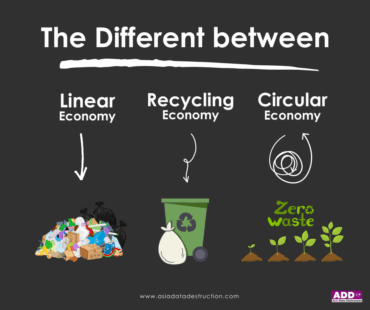
.
4 Key Differences You Need to Know! What Are Circular Economy vs Recycling Economy vs Linear Economy?
In an era where natural resources are continuously depleting and environmental problems such as global waste overload, pollution, and climate change are becoming increasingly severe, efficient resource use is no longer just an “option.” It has become a “necessity” that businesses, governments, and consumers must prioritize.
As a result, concepts related to economics and resource management have gained more attention and development. In particular, the terms Circular Economy, Recycling Economy, and Linear Economy have become key models used to explain how humans utilize resources in different ways. Although many people may have heard of these terms, there is still confusion about how they differ and which model is more suitable or sustainable for the future.
Understanding the differences between these three systems is not only important at the organizational or business level but also directly impacts our daily lives. This includes purchasing behavior, resource consumption, waste management, and even decisions about choosing environmentally responsible brands.
Moreover, many countries around the world are actively promoting the concept of the Circular Economy as a long-term solution to environmental challenges. Meanwhile, the Recycling Economy is widely used as a method to reduce current waste, and the Linear Economy is increasingly being questioned for its lack of sustainability in the modern world.
This article will guide you through a deeper understanding of these three economic models, from their basic principles and working mechanisms to their strengths, limitations, and real-life examples. This will help you clearly see how Circular Economy, Recycling Economy, and Linear Economy differ and what roles they play in today’s and future global economy.
By the end of this article, you will have a clearer overview of these three systems, understand which model different businesses or organizations are operating under, and most importantly, be able to apply this knowledge in your daily life to help reduce environmental impact in a more practical and meaningful way.
.
What is Linear Economy ?
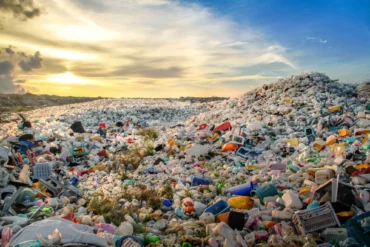
Linear Economy is a traditional economic model that has been used by humans for a very long time. Its core idea is to extract natural resources, transform them into products, use them, and finally dispose of them as waste. This system is often described as the “take–make–waste” model, which focuses on short-term value creation through a straightforward production cycle: extract → produce → consume → dispose.
In this system, natural resources are often treated as if they are unlimited or at least sufficient for continuous long-term use. As a result, product and service design tends to prioritize convenience, low cost, and mass production rather than environmental or social impacts throughout the product’s lifecycle.
In simple terms, Linear Economy is a “use-and-dispose” system. Once a product has reached the end of its usage, it is discarded as waste without being effectively reused or recovered.
Key Characteristics of Linear Economy
- Relies heavily on virgin natural resources for production
- Products are designed with limited lifespans (often difficult to repair)
- Focuses on sales growth and short-term economic expansion
- Generates large amounts of waste and by-products
- Lacks efficient resource circulation back into the system
This model has historically been a major driver of industrial economic growth because it enables fast production and low manufacturing costs, meeting the rapidly increasing demand from consumers.
Examples of Linear Economy in Daily Life
- Single-use plastic cups and straws
- Fast fashion clothing that is cheaply produced and quickly discarded
- Electronic devices that are difficult or not cost-effective to repair
- Non-reusable or non-recyclable packaging materials
These examples clearly reflect a “use-and-dispose” behavior, which is the core principle of Linear Economy.
Advantages of Linear Economy
Although it has long-term environmental drawbacks, Linear Economy still offers several short-term benefits:
- Fast and large-scale production of goods
- Low production costs, making products more affordable
- Supports rapid economic growth in the short term
- Quickly meets consumer demand and market needs
Disadvantages of Linear Economy
However, over time, the limitations of this system have become increasingly clear:
- Excessive consumption of natural resources
- Massive generation of waste
- Environmental pollution in air, water, and soil
- Increased risk of resource depletion in the future
- Contribution to climate change and global warming
In addition, reliance on a “use-and-deplete” approach makes the economic system more vulnerable when resources become scarce or more expensive.
Why is Linear Economy becoming unsustainable?
In the past, Linear Economy may have been suitable for a world with a smaller population and abundant natural resources. However, the situation today has changed significantly:
- The global population continues to grow
- Consumption levels are increasing rapidly
- Natural resources are being depleted
- Waste and pollution problems are becoming more severe
These factors make Linear Economy increasingly unsustainable in the long run and have led many countries and organizations to explore alternative models such as Recycling Economy and Circular Economy.
Simple Summary of Linear Economy
Linear Economy is a system based on “produce–use–dispose,” with little or no focus on reusing resources. While it is efficient in terms of speed and cost, it leads to high resource consumption and large amounts of waste. In the long term, it negatively impacts environmental sustainability and resource availability.
Understanding Linear Economy is the first step toward recognizing why the world is shifting toward more sustainable models like Recycling Economy and Circular Economy.
.
What is Recycling Economy ?
.
What is Circular Economy ?
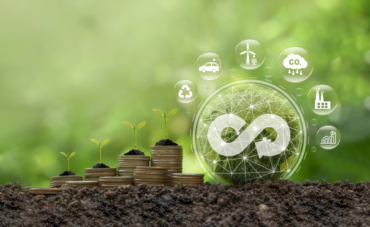
Circular Economy is a concept that focuses on designing a sustainable economic system (sustainability) by eliminating waste and keeping resources in use for as long as possible. It is an alternative to the traditional Linear Economy, where materials are extracted, used, and then disposed of as waste.
In a Circular Economy system, products and materials are reused, repaired, refurbished, and recycled within a closed-loop system. This means raw materials are continuously kept in circulation, while waste is minimized as much as possible.
The Circular Economy is built on three key principles:
- Eliminate waste and pollution from the design stage
- Keep products and materials in use for as long as possible
- Regenerate natural systems
This approach promotes efficient resource use, reduces environmental impact, and creates both economic and social benefits. It also helps address major global challenges such as climate change, resource depletion, and biodiversity loss.
Core Concept of Circular Economy
Circular Economy goes beyond the Recycling Economy by focusing on system design from the very beginning to ensure that resources are continuously reused and waste generation is minimized.
The main idea includes:
- Designing products for long-term use
- Enabling repair and reuse
- Making recycling easier and more efficient
- Reducing reliance on virgin raw materials
Examples of Circular Economy
- Products designed with replaceable or repairable parts
- Refurbished products (restored and resold items)
- Rental-based systems instead of ownership, such as car or equipment sharing
- Reusable packaging systems
These examples show how products can remain in use for longer instead of becoming waste after a single use.
Advantages of Circular Economy
- Significantly reduces waste generation
- Uses natural resources more efficiently
- Supports long-term environmental sustainability
- Creates new business models and economic opportunities
- Reduces environmental impact across industries
Challenges of Circular Economy
Despite its benefits, Circular Economy also faces several challenges:
- Requires major changes in production and consumption systems
- Depends heavily on innovation and eco-friendly product design
- Needs collaboration between governments, businesses, and consumers
- Can involve higher initial investment costs
Summary of Circular Economy
Circular Economy is a sustainable model that aims to eliminate waste from the start, rather than managing it after it is created. It encourages keeping products and materials in use for as long as possible through reuse, repair, refurbishment, and recycling.
In short:
- Linear Economy = take, make, dispose
- Recycling Economy = take, make, recycle
- Circular Economy = design, use, reuse, regenerate
Circular Economy represents a long-term solution for building a more sustainable future for both the environment and the economy.
.
Comparison: Circular Economy vs Recycling Economy vs Linear Economy
Here is a clear comparison of the three economic models in terms of their structure, resource usage, waste generation, and core concept:
| System | Model | Resource Usage | Waste Level | Core Idea |
|---|---|---|---|---|
| Linear Economy | Produce → Use → Dispose | High | Very high | “Use and finish” |
| Recycling Economy | Produce → Use → Recycle | Moderate | Reduced | “Solve at the end stage” |
| Circular Economy | Continuous reuse loop | Low | Very low | “Design out waste from the start” |
.
How is Circular Economy different from Recycling Economy?
Both Recycling Economy and Circular Economy are approaches aimed at waste management and promoting sustainability. However, they differ significantly in their scope, objectives, and how they operate.
Recycling Economy
Recycling Economy focuses on the process of collecting, sorting, and reprocessing materials to create new products. The main goal is to divert waste away from landfills and reduce the demand for virgin raw materials.
This approach typically involves recycling various types of materials such as:
- Plastic
- Metal
- Glass
- Paper
- Electronic waste
In simple terms, Recycling Economy deals with “waste after it is created.” It helps reduce environmental impact by turning used materials into new resources, but it still relies on a system where waste has already been generated.
Circular Economy
Circular Economy, on the other hand, is a much broader and more holistic concept. It aims to eliminate waste from the beginning by redesigning the entire system of production and consumption.
It involves rethinking the full lifecycle of a product—from design, production, and usage to reuse and end-of-life treatment. The goal is to maximize value while minimizing environmental impact.
Key principles include:
- Keeping resources in use for as long as possible
- Reducing the use of virgin raw materials
- Designing products for reuse, repair, and refurbishment
- Ensuring continuous flow of materials and energy within the system
In short, Circular Economy focuses on “preventing waste before it is created.”
Key Difference
While recycling is an important part of the system, it represents only one component of Circular Economy.
- Recycling Economy = manages waste that already exists
- Circular Economy = redesigns the entire system to prevent waste from being created in the first place
Therefore, Circular Economy involves a much deeper transformation in how we produce, consume, and dispose of goods and services, aiming to build a more sustainable and resilient economic system.
Summary
- Recycling Economy focuses on processing and reusing waste materials
- Circular Economy focuses on designing out waste from the system entirely
Recycling is a step toward sustainability, but Circular Economy is the long-term solution for a truly sustainable future.
At Asia Data Destruction, we support sustainability by ensuring IT equipment is handled responsibly. Harmful materials are properly disposed of, while valuable components are recovered and reused efficiently—helping reduce environmental impact and support a more circular and sustainable system.
.
.
Everyday Examples
You can easily take part in the Circular Economy in your daily life by doing simple actions such as:
- Choosing products that are designed to last longer
- Repairing items instead of buying new ones
- Using second-hand or refurbished products
- Properly separating waste for recycling
- Reducing the use of single-use plastics
.
Conclusion
The difference between Circular Economy, Recycling Economy, and Linear Economy lies in the “way of thinking about resource management.”
- Linear Economy focuses on use and dispose
- Recycling Economy focuses on reusing and recycling existing materials
- Circular Economy focuses on designing systems that prevent waste from being created in the first place
In the long term, the Circular Economy is the most sustainable approach because it minimizes environmental impact and ensures that resources are used as efficiently as possible.
The transition from a Linear Economy to a Circular Economy may take time, but everyone can start with small changes in daily behavior. When combined, these small actions can create a massive positive impact on the planet.