
 ไทย
ไทย 日本語
日本語 Tiếng Việt
 ភាសាខ្មែរ
In today’s business world, information technology has become the core of operations across all industries. Whether it is a small organization, a multinational corporation, a government agency, or an educational institution, all rely on a large number of IT assets such as computers, laptops, servers, hard drives, storage devices, and networking equipment to support their daily operations.
However, when these assets reach the end of their useful life, are upgraded to newer models, or no longer meet business requirements, many organizations view the disposal of old equipment as a minor issue. In reality, these devices still contain a significant amount of important organizational data, and if they are not managed properly, they may lead to substantial legal, financial, and reputational damage.
For this reason, the concept of ITAD (Information Technology Asset Disposition) was developed. ITAD is a systematic, secure, and environmentally responsible process for managing end-of-life information technology assets.
ITAD does not simply mean disposing of or reselling old computers. Rather, it is a comprehensive process that includes asset auditing, secure data erasure, value recovery, recycling, and electronic waste management in accordance with international standards.
Today, ITAD has become one of the key components of Risk Management, Data Governance, and Sustainability Management.
.
Risks Organizations Face Without an ITAD Program
Many organizations place great importance on protecting data during its active use but overlook the period when equipment is being decommissioned, which is often the highest-risk stage.
Imagine an organization selling old computers or unused hard drives to external parties without properly erasing the data. The buyer may use data recovery tools to retrieve the original information, including:
- Customer data
- Financial information
- Internal organizational documents
- Business contracts
- Employee information
- Intellectual property data
If such information is leaked, it may result in severe business damage, including violations of personal data protection laws such as Thailand’s PDPA or the European Union’s GDPR.
In addition to data-related risks, organizations may also face environmental issues resulting from improper disposal of electronic equipment, as many devices contain lead, mercury, cadmium, and other hazardous substances that can contaminate soil, water, and air.
.
How ITAD Works
The ITAD process consists of multiple interconnected steps designed to ensure that IT assets are managed securely and that their value is maximized.
1. Asset Inventory and Assessment
The first step is to collect information on all assets scheduled for retirement, including:
- Desktop Computers
- Laptops
- Servers
- Storage Systems
- Routers
- Switches
- Firewalls
- Hard Disk Drives (HDDs)
- Solid-State Drives (SSDs)
- Tape Backups
The ITAD provider will assess each asset to determine the most appropriate course of action.
2. Secure Collection and Transportation
After the assets have been assessed, they are transported under security measures such as:
- Asset number recording
- Use of sealed containers
- Transportation tracking systems
- Chain of Custody control
These measures help prevent loss or unauthorized access to data.
3. Data Sanitization
Data sanitization is the most critical step in the ITAD process.
Simply deleting files or formatting a drive does not mean the data has been permanently removed, as it can still be recovered using specialized tools.
Therefore, ITAD providers use standard techniques such as:
Data Wiping: The process of securely removing data from storage devices using specialized software that overwrites existing data multiple times until it can no longer be recovered, even with advanced data recovery tools.
Data Overwriting: A method of data destruction that involves writing new data over existing storage space, replacing old data so that it can no longer be recovered.
Secure Erase: A secure data deletion process specifically designed for storage devices such as HDDs and SSDs. It instructs the device firmware to erase all data at the hardware level, making recovery impossible.
Cryptographic Erasure: A data destruction process that renders encrypted data permanently unreadable by deleting or destroying the encryption key rather than deleting the data itself.
These processes ensure that the data can no longer be recovered.
4. Physical Data Destruction
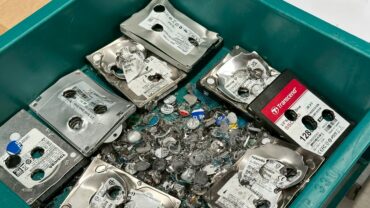
For highly sensitive storage devices, organizations may choose to physically destroy the media, such as through:
Shredding: The process of destroying storage media or electronic devices by shredding, crushing, or cutting them into small pieces using specialized machinery, making data recovery impossible.
Crushing: The process of physically destroying storage media by applying high pressure or compression, severely damaging the structure of the device so that it can no longer be used or accessed.
Degaussing: The process of destroying data by using a powerful magnetic field to erase the magnetic structures used to store data on storage media, permanently removing all information and preventing recovery.
Drilling: The process of destroying storage media by drilling holes through critical parts of the device using industrial drills or specialized drilling equipment, damaging the internal structures used to store data and reducing the possibility of data recovery.
These methods ensure that data is completely destroyed.
5. Equipment Evaluation
After data has been erased, the equipment is evaluated to determine its condition.
If the equipment is still functional, it may be:
Refurbished: The process of improving, repairing, and restoring previously used IT equipment so that it can function properly again or as close to new condition as possible before being reused or resold. This is an important step in increasing the value of end-of-life IT assets that do not yet need to be destroyed.
Repaired: The process of fixing damaged or malfunctioning equipment so that it can function normally or close to its original condition by repairing, replacing, or improving defective components. This helps extend the useful life of equipment and increases the opportunity for reuse or resale.
Resold: The process of returning functional IT equipment to the market through secondary markets, distributors, or organizational channels with the goal of converting retired assets into revenue. This is an important step in maximizing the economic value of IT equipment before recycling or destruction.
Redeployed: The process of returning functional IT equipment to service within the organization after inspection, repair, or system preparation. This allows organizations to maximize the use of internal IT assets before considering resale or recycling.
These activities help create additional value for the organization.
6. Proper Recycling
The process of managing electronic equipment that can no longer be used by dismantling devices, sorting materials, and sending them to environmentally compliant recycling processes. Valuable materials such as metals, plastics, and minerals can then be safely recovered and reused.
This is the final stage of the IT asset management lifecycle when repair, refurbishment, redeployment, or resale is no longer possible.
.
Data Destruction: The Core of ITAD
The primary reason organizations around the world invest in ITAD is Data Security.
Data is considered the most valuable asset of an organization in the digital age.
Cybersecurity statistics indicate that many data breaches are not caused by cyberattacks, but rather by the improper handling of end-of-life IT equipment.
Therefore, a qualified ITAD service provider must be capable of performing data destruction in accordance with international standards and issuing a Certificate of Data Destruction as proof that every device has been managed properly.
.
ITAD and Personal Data Protection Laws
Organizations today are required to comply with increasingly stringent personal data protection laws.
For example:
Thailand’s PDPA: The Personal Data Protection Act B.E. 2562 (2019) is Thailand’s data protection law established to protect individuals’ personal data and regulate the collection, use, and disclosure of information to prevent unauthorized use.
The European Union’s GDPR: The General Data Protection Regulation is the European Union’s personal data protection law, which came into effect on May 25, 2018. Its objective is to strengthen personal data protection standards for individuals in Europe and establish a unified standard across the European Union.
GDPR is considered one of the most stringent data protection laws in the world and affects organizations globally, not just those operating in Europe.
The United States’ CCPA: The California Consumer Privacy Act is a personal data protection law of the State of California, United States, which came into effect on January 1, 2020. Its objective is to give consumers the right to control their personal information and increase transparency regarding how businesses collect and use data.
CCPA was later enhanced and expanded through the California Privacy Rights Act (CPRA), portions of which became effective in 2023 to further strengthen privacy protections.
These laws require organizations to protect personal data throughout the entire data lifecycle, from collection, use, and transfer to data destruction.
Therefore, ITAD serves as an important mechanism that helps organizations comply with Data Protection requirements effectively.
.
ITAD and ESG Sustainability
Today, investors, customers, and business partners are placing greater importance on ESG.
ESG stands for:
- Environment
- Social
- Governance
Organizations with a strong ITAD program can clearly demonstrate their commitment to environmental responsibility and good governance.
The reuse of equipment, recycling, and the reduction of electronic waste are all activities that support ESG objectives.
In addition, these activities help reduce greenhouse gas emissions associated with the manufacturing of new equipment and promote the efficient use of resources.
.
ITAD and the Circular Economy
The concept of the Circular Economy is gaining increasing attention from organizations around the world.
Instead of following the traditional resource model of:
Produce → Use → Dispose
The Circular Economy promotes a cycle of:
Produce → Use → Repair → Reuse → Recycle
ITAD is one of the key tools that helps organizations transition toward a circular economy.
Many devices that organizations consider waste can still generate significant value through repair and resale.
.
Benefits of ITAD for Organizations
1. Reducing Data Risks
One of the most important benefits of ITAD is preventing data breaches.
Old IT equipment often still contains important information such as:
- Customer data
- Employee information
- Financial records
- Internal system data
ITAD helps reduce these risks through processes such as:
- Data Wiping
- Secure Erase
- Cryptographic Erasure
- Physical Destruction (Shredding / Crushing)
👉 The result is that organizations can be confident that “no data remains” before equipment leaves their control.
2. Cost Reduction
ITAD helps reduce costs in several ways, not just through the disposal of old equipment, but also by:
- Reducing storage space costs for unused equipment
- Lowering IT asset management costs
- Reducing unnecessary spending on new equipment through Redeployment
- Minimizing the costs associated with unstructured disposal processes
👉 Organizations can transform “unused equipment” into resources that are managed more efficiently and cost-effectively.
3. Revenue Generation
Many IT assets still contain hidden value even after they have reached the end of their useful life within an organization.
ITAD helps generate revenue through:
- Resale
- Refurbishment
- Exporting to secondary markets
- Redeployment for internal use to reduce costs
👉 Instead of becoming “IT waste,” these assets become “revenue-generating assets.”
4. Regulatory Compliance
ITAD supports compliance with PDPA requirements and data security standards.
Particularly in areas such as:
- Secure data erasure
- Data breach prevention
- Audit Trail capability
- Certificate of Data Destruction documentation
👉 This helps reduce legal risks and potential penalties.
5. Supporting ESG
ITAD helps organizations achieve their environmental and sustainability goals by:
- Reducing electronic waste (E-Waste)
- Reducing the consumption of new natural resources
- Supporting recycling and the Circular Economy
- Reducing the carbon footprint associated with manufacturing new equipment
👉 This helps organizations appear more sustainable in the eyes of investors and society.
6. Enhancing Corporate Reputation
Organizations with a strong ITAD program demonstrate professionalism and responsibility in several areas, including:
- Data Security
- Transparency in asset management
- Environmental responsibility
- Management in accordance with international standards
👉 These factors help increase credibility and trust among customers, business partners, and investors.
.
How to Choose a Qualified ITAD Service Provider
The selection of an ITAD service provider should be based on the following factors:
1. Experience and Expertise
The provider should have experience in managing a wide range of IT equipment and assets.
2. International Standards
The provider should comply with internationally recognized standards.
Examples include:
- ISO 27001
- ISO 9001
- ISO 14001
3. Ability to Issue Certificates
The provider should be able to issue both Data Destruction Certificates and Recycling Certificates.
4. Tracking System
The provider should have a system that allows the status of equipment to be tracked at every stage of the process.
5. Transparency
The provider should maintain transparency and allow the entire process to be audited and reviewed retrospectively.
.
The Future of ITAD in the Digital Era
In the future, the number of electronic devices worldwide will continue to increase due to the growth of:
Cloud Computing: A model for delivering IT resources over the internet, allowing users to access servers, storage, databases, software, and computing power without having to install or manage the infrastructure within their own organizations.
AI: Technology that enables computers or systems to think, analyze, learn, and make decisions in a manner similar to humans by using data and algorithms for processing.
IoT: Technology that enables devices to connect to the internet, send and receive data, and communicate with one another automatically without requiring constant human intervention.
Data Center: A facility specifically designed for storing data, processing information, and providing large-scale IT services such as websites, applications, cloud services, and organizational databases.
Hybrid Work
As a result, the volume of electronic waste will increase significantly.
Organizations with effective ITAD programs will be better equipped to manage risks, reduce costs, and create long-term competitive advantages.
In addition, investors and consumers are placing greater importance on organizations that operate responsibly toward society and the environment, making ITAD an unavoidable component of modern corporate strategy.
.
Conclusion
ITAD, or Information Technology Asset Disposition, is a comprehensive process for managing end-of-life IT assets, covering everything from asset collection, data erasure and destruction, equipment reuse, resale, and environmentally responsible recycling in accordance with international standards.
In an era where data has become highly valuable and data protection regulations are becoming increasingly stringent, ITAD is no longer simply about disposing of old computers or unused hard drives. It has become a critical strategy for risk management, value recovery from retired assets, and supporting sustainable business operations.
Organizations that invest in proper ITAD processes benefit from enhanced data security, regulatory compliance, cost reduction, revenue generation from existing assets, and contributions to environmental sustainability. These are all key factors for business success in today’s digital world and in the future.